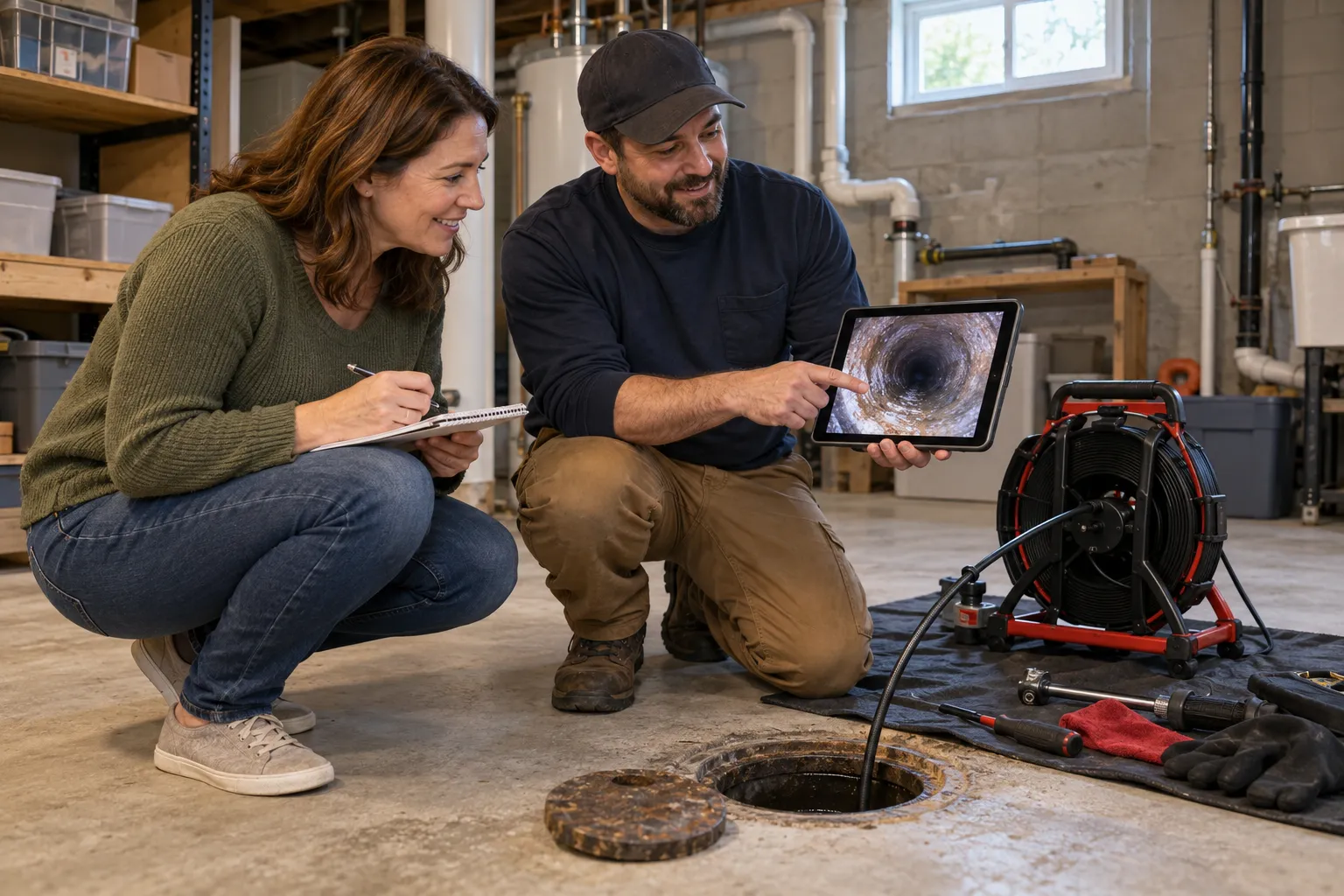
Sewer line repair means fixing the large pipe that carries waste from your house to the street or a septic tank. A lot of people think a clog is always the cause. Sometimes the pipe itself is cracked, crushed or full of roots. Signs include sewage in a floor drain, several slow fixtures at once, and wet spots in the yard. In a home with a full basement, a basement floor drain often shows trouble first.
Occasionsdoctor Plumbing is a referral service. We do not do the work. We connect you with independent local providers in our network who inspect the line and explain your repair options. Before you reach out, take photos, jot down notes and gather past records. Notes make estimates easier, and organized details can help if you talk with your insurance company.
Sewage Backing Up? Start Here
A lot of people think a backed-up floor drain will clear on its own. In practice, sewage coming up often means the main line is blocked or broken. Waiting can let it spread into carpet, drywall and stored boxes.
Keep Everyone Safe First
- Stop using sinks, toilets, showers and the washer.
- Keep kids and pets out of the wet area.
- Stay out of standing water near outlets, a panel or a sump pump cord.
- Wear rubber boots and gloves if you must go in, and wash well after.
- Never mix bleach with other cleaners to hide the smell.
Photos First, Then Phone
Before you clean up, take wide and close photos of the water, the drain and anything damaged. Write down the time you first noticed it. Providers can often help document damage for a claim, and your photos give them a head start.
Request a callback to check provider availability in your area.
Signs Your Sewer Line Is Failing
Myth: One Slow Drain Tells the Whole Story
One slow sink is usually a small, local clog. But when the tub gurgles as the toilet flushes, or the basement floor drain bubbles, the trouble is likely farther down the pipe. Think of the main line like a highway. A wreck there backs up every road that feeds into it.
Clues Outside the House
- Soggy or sunken patches in the yard
- A strip of extra-green grass along the pipe path
- A sewer smell near the foundation
- Rodents or bugs coming up from the ground
Write each sign down with a date. A short log shows a provider whether things are getting worse, and it keeps your memory honest when the stress is high.
What Damages Sewer Lines
Roots Looking for Water
Tree roots slip into tiny joints and keep growing. Hot, humid summers speed that up. Over time roots can block the pipe or crack it open.
Old Pipe and Frozen Ground
Many frame houses from past decades have clay, cast iron or fiber pipe. These can crack, sag or flake. Deep winter frost can also shift soil and pull joints apart.
Storms and Spring Flooding
Severe thunderstorms and spring flooding can overload the system. Water may push into weak spots or force sewage back toward a basement.
Ready to compare options? Request an estimate with your photos and notes in hand.
How Sewer Problems Get Diagnosed
Myth: They Have to Dig Up the Yard to Look
Not usually. A provider can feed a small camera through a cleanout or drain. The video shows cracks, roots, sags and breaks. A locator can then mark the depth and the spot above ground.
Notes Make Estimates Easier
Gather your photos, your dated log and any old plumbing records. Add the age of the house, past backups and any recent tree work. Clear details mean fewer guesses and a clearer written quote. Ask to keep a copy of the camera video too. It is handy if you need to share details with your insurance company.
Sewer Line Repair Options
Spot Repair and Lining
If the damage is limited, a provider may fix just one section. Trenchless lining places a new liner inside the old pipe with little digging. It does not suit every pipe, so ask if yours qualifies.
Digging and Full Replacement
A collapsed or badly sagging pipe may need a trench. That costs more and disturbs the yard, but it can fix the root cause. Ask how the provider will handle lawns, driveways and frozen soil in winter.
Request a callback to talk through what your situation may need.
Permits and Property Lines
Many towns require a permit for sewer work, especially digging. The pipe from your house to the property line is usually yours. The part under the street often belongs to the city or utility. Ask the provider who pulls the permit and who schedules inspections. If the problem sits in the public section, you may need to contact the utility yourself.
Some policies may cover sudden damage, but many exclude wear and root damage. Check your policy and ask your agent before work begins.
Questions to Ask the Provider
- Will you run a camera, and can I keep the video?
- Is the quote written and itemized?
- Does it include permits, cleanup and restoring the dig site?
- What repair options exist, and why do you suggest this one?
- Is there a written warranty on the work?
- Are you licensed and insured in my state?
Write the answers on the same page as your photos. Then lay the quotes side by side.
Request an estimate once your folder is ready.
What's Included
Camera Inspection
A small camera shows cracks, roots and breaks inside the pipe so repairs target the real problem.
Spot Repairs
Providers can fix one damaged section when the rest of the line is still in good shape.
Trenchless Lining or Digging
Some lines can be lined in place. Others need a trench. A provider explains which fits.
Cleanout Access
A cleanout gives easy entry for cameras and tools and makes future checks much simpler.
Typical Sewer Line Repair Cost Ranges
These are typical U.S. ranges. Your price depends on pipe depth, length, material, access, frozen ground and local permit rules. Treat the numbers as a starting point and ask for a written, itemized quote before work begins.
| Item | Typical range | Notes |
|---|---|---|
| Camera inspection | $100 – $500 | Often needed before any repair plan |
| Main line clearing | $200 – $800 | Cost rises with roots or heavy buildup |
| Spot repair | $1,000 – $4,000 | Depends on depth and how much digging |
| Trenchless lining | $3,000 – $10,000 | Not suited to every pipe |
| Full line replacement | $3,000 – $25,000 | Long runs and deep pipe cost more |
| Cleanout installation | $1,000 – $4,000 | Makes later inspection easier |
How It Works
Stop and Stay Safe
Stop using water, keep people away from standing sewage and avoid contact with it until the line is checked.
Photos, Notes and Records
Photograph the damage, write down what you saw and when, and gather past plumbing papers.
Call or Request Estimate
Request a callback or send the request form so a provider can reach out.
Compare Written Quotes
Review the scope, permits and cleanup in each quote, then pick the provider that fits.
Why Call Occasionsdoctor Plumbing
Organized Before You Call
Photos, dated notes and records help you explain the problem and compare quotes with confidence.
Local Providers
Independent providers in our network know local soil, frost depth and common permit rules in your area.
Plain-Language Guidance
Myth versus reality tips explain each step so a first-timer is not left guessing about what comes next.
No Obligation
Requesting an estimate does not commit you to hire anyone, so you can compare choices calmly.
Other Services
Need sewer line repair in Kansas City?
Tell us what is happening, add a few photos if you can, and we will point you toward a local provider in our network.
Sewer Line Repair FAQ
How do I know if my sewer line is broken or just clogged?
One slow drain is often a simple clog. If many drains gurgle, back up together, or sewage shows in a basement floor drain, the main line may be damaged. A camera inspection confirms the real cause.
How much does sewer line repair cost?
Cost varies a lot with pipe depth, length, material and repair method. Spot repairs often cost less than full replacement, and trenchless lining usually falls in between. Check the typical ranges above, and get a written quote before any work starts so you can compare.
Does homeowners insurance cover a sewer line backup?
Some policies may cover sudden damage, but many exclude wear, age or roots, and backup coverage is often an add-on. Check your policy and ask your agent. Providers can often help document damage for a claim.
Reach a local provider
Tell us what is happening, add a few photos if you can, and we will point you toward a local provider in our network.
No obligation