Plumbing Questions, Answered in Plain Words
Questions and answers
What happens when I contact a plumbing provider for an emergency?
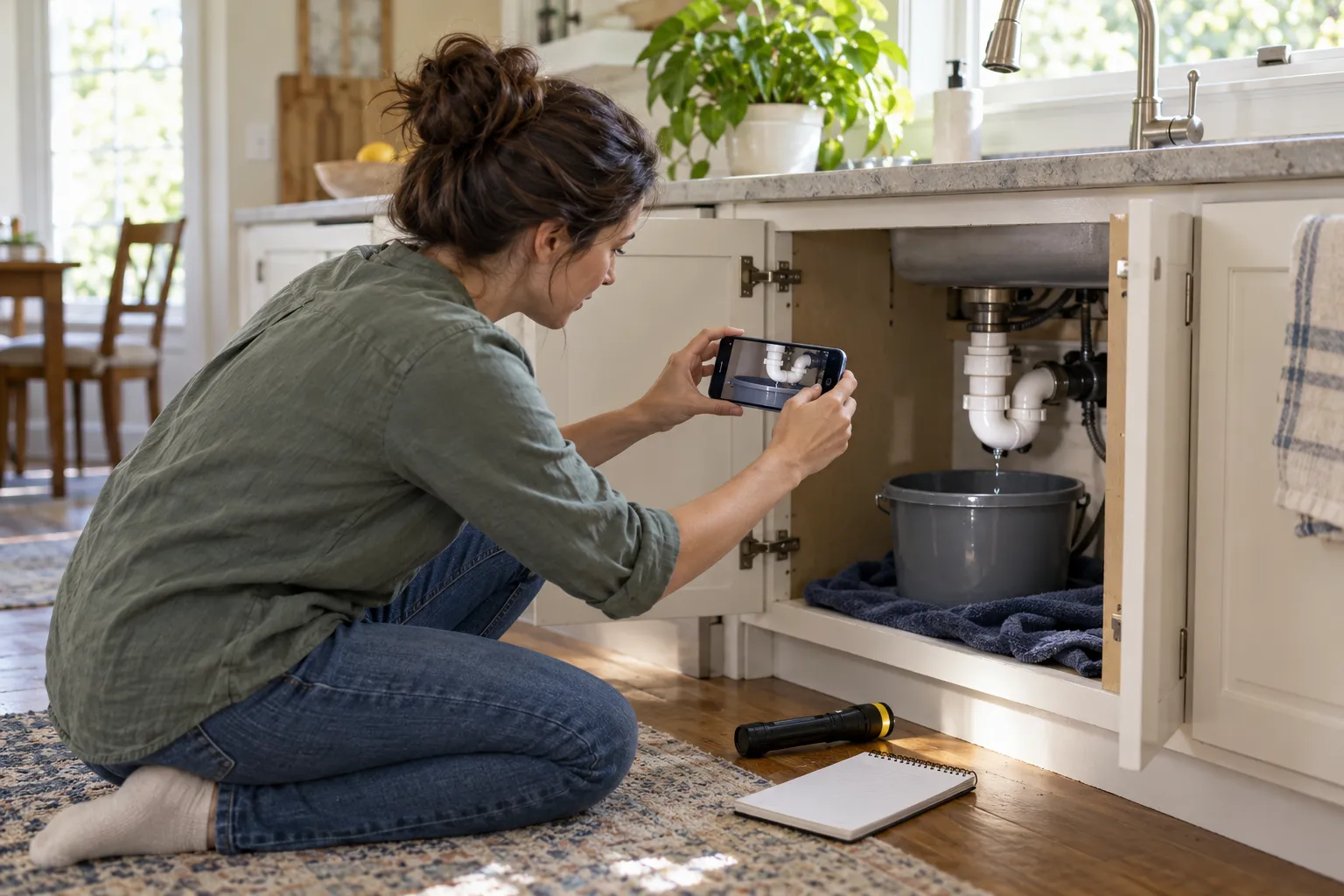
Many people think a plumber just shows up with no questions. In practice, the provider usually asks what you see, hear and smell first. Have your photos and notes ready. Photos first, then phone. Then the provider can tell you if they can respond quickly, what the visit may involve, and what to do while you wait.
Should I shut off the water before I call a plumber?
A lot of people think they should wait for help to arrive. If water is leaking or a pipe has burst, shutting off the main valve is often a smart first step. Find it before you ever need it. Take a photo of the valve and the problem. Then Request a callback to check provider availability and ask what else to do while you wait.
Can I clear a clogged drain myself with chemical cleaner?
Many homeowners believe a bottle of drain cleaner fixes any clog. In practice, harsh chemicals can sit in the pipe, harm older metal pipes and make the job unsafe for the next person. A plunger or hand snake can handle small clogs. If several drains slow down at once, the problem may be deeper, so ask a provider.
How much does emergency plumbing or sewer repair usually cost?
People often assume there is one set price. In practice, costs vary by job. Typical U.S. ranges run from about $150 to $600 for drain clearing and from a few thousand to well over $10,000 for sewer line repair or replacement. Access, depth and pipe type all matter. Always ask for a written quote before work begins.
Will my homeowners insurance cover a burst pipe or sewer backup?
Many people think insurance covers everything, or nothing. Neither is a safe guess. Some policies may cover sudden damage, while backups often need extra coverage. Check your policy or ask your agent. Providers can often help document damage for a claim. Keep photos, notes, receipts and any written estimates in one folder.
What records should I keep for an estimate or insurance claim?
Notes make estimates easier. Take wide and close photos of the problem and any water damage, with a timestamp if you can. Write down when it started and what you noticed. Keep receipts for repairs and any items you move or toss. Save every written quote. A simple folder on your phone works well.
How do I know if I have a sewer line problem and not a simple clog?
Many people think every slow drain is a small clog. In practice, signs of a sewer line problem include gurgling toilets, backups in the drain closest to the floor, bad smells, and wet spots in the yard. In homes with full basements, the floor drain often shows trouble first. A provider can inspect the line with a camera.
Do I need to be home when the provider arrives?
Most people expect they can leave a key and go. In practice, an adult should usually be there. The provider may need to show you the problem, explain options and get your approval before starting. Be ready to point out shutoff valves, the basement drain and any spots where you saw trouble.
Reach a local provider
Tell us what is happening, add a few photos if you can, and we will point you toward a local provider in our network.
No obligation